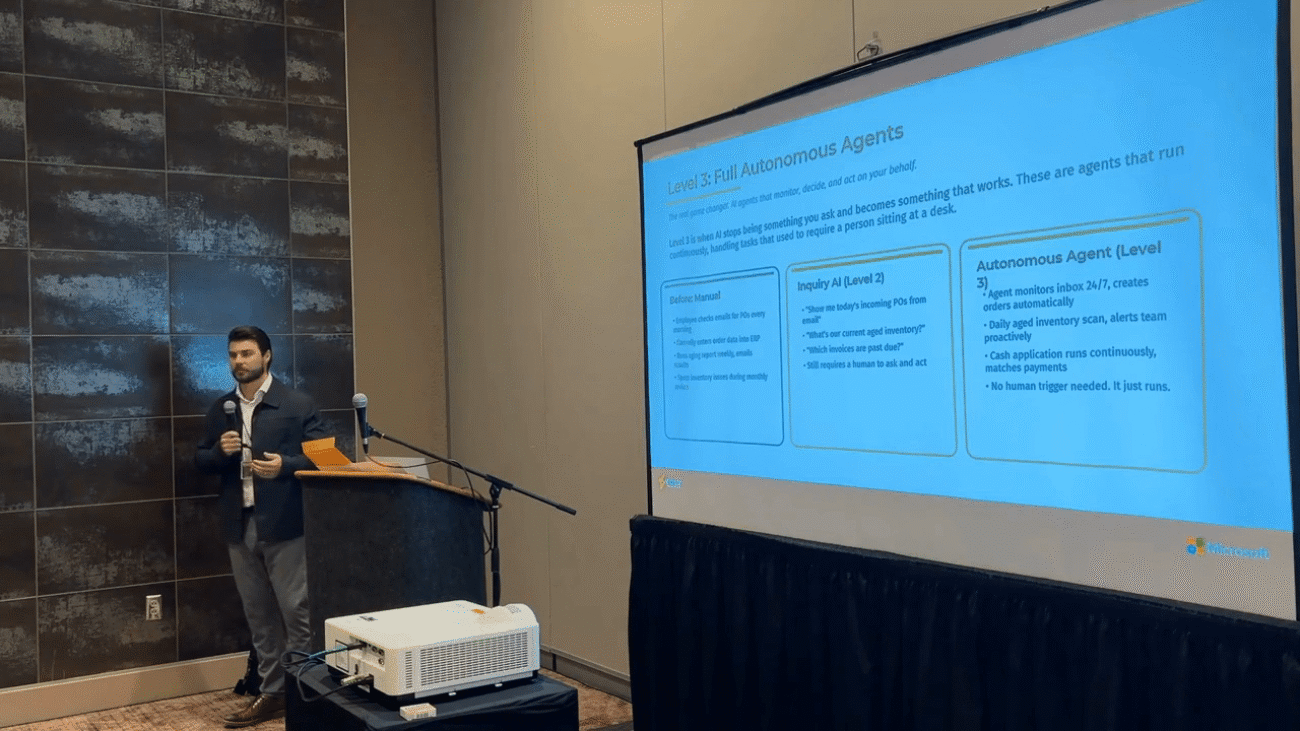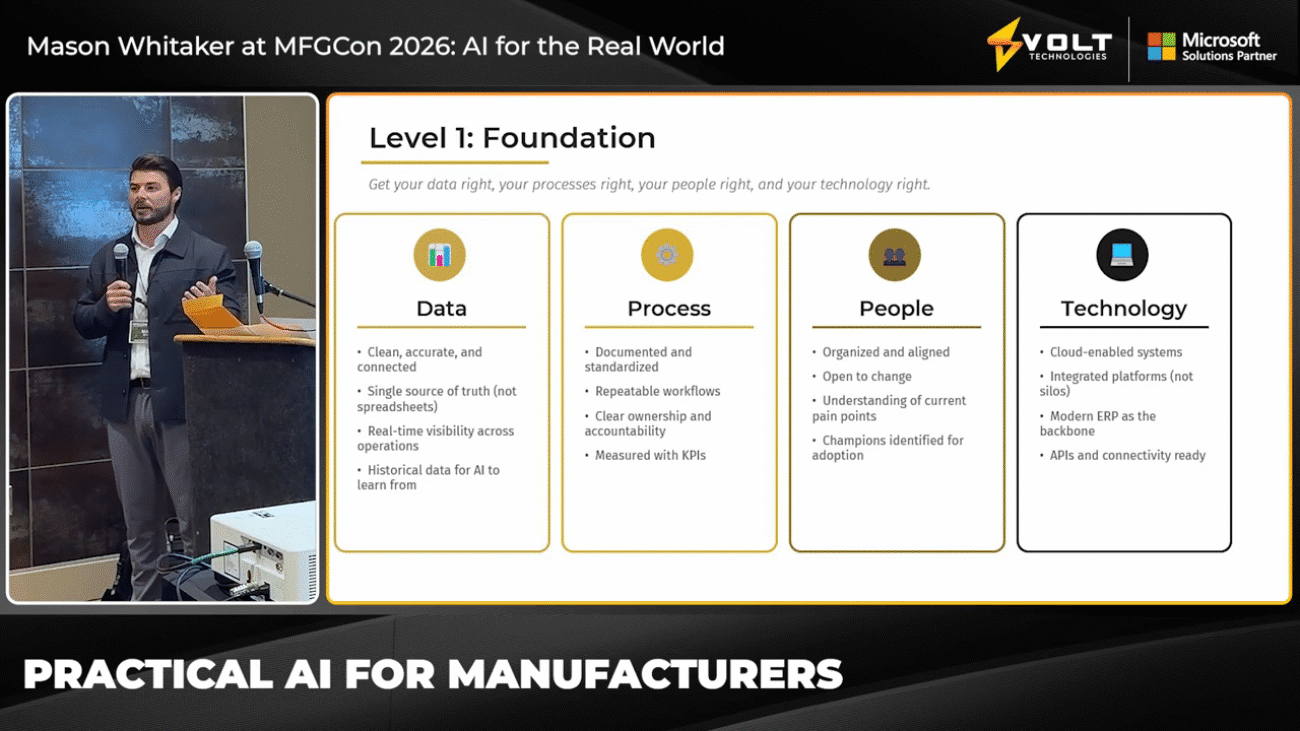
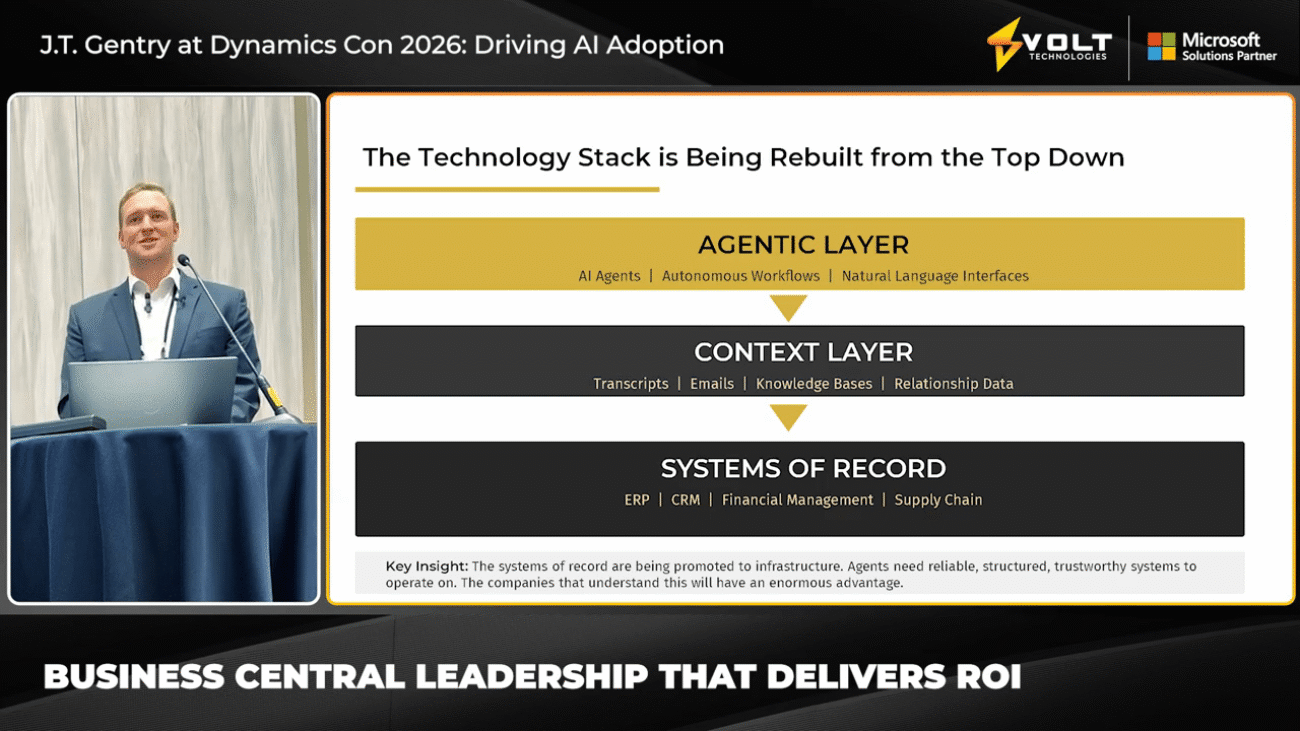
Wanna say thank you for joining today. Just always want to express gratitude and and express thanks for for taking an hour of your day to to spend with us. And today, big surprise, we're gonna be talking about AI. But I will say, hopefully, isn't in the way that you have normally heard AI spoken about up to this point multiple times in this show, and I'm sure many other shows as well. And I think what we're actually gonna talk about today makes, you know, AI really work. Right? And what you guys can do in a practical way as as business leaders within your organization to really pioneer this change in in adoption, and then talk about how we've been doing it and really be able to foster some ideas, and and hopefully leave some time for some q and a as well at the end and and go from there and bounce ideas off each other. So just to dive in here, my name is JT Gentry, and I serve as the director of strategic partnerships at Volt Technologies. And we are a Dynamics three sixty five Business Central partner. And over the last few years, I would say we've shifted a huge amount of our focus toward AI, right, as I'm sure many of you all have. And I would say this isn't just a shift toward thinking about AI or or adopting the licenses, but really, I would say, helping our customers actually adopt AI and not just, you know, talking about it, but really getting value out of it. And this session, really the goal focus that I have is in really explaining how business central leaders, again, people like you all, can build trust around AI within your organizations and reduce the resistance that you're inevitably going to hit, right, through this adoption. These are big changes, right, that require a lot of people management as well. And really improve the ROI on this AI investment that your company is already making and is about to make. I would say this is honestly, I always say, one of the coolest periods in history, in my opinion, right, as we're entering this revolutionary change and how fast AI is really changing the landscape, right, of every area of our lives. I have a four year old daughter at home, right, and she's, dad, which is better, clot or GPT, you know, and all this stuff? And I'm like, she's poor, right? But it's just the era that, you know, kids are growing up in, and it's just totally different even from when I was a kid. And really what I'm gonna do in this session is is walk you through how we think about it, and then actually gonna walk you through the exact methodology that our team has used in deploying a lot of these AI solutions for our clients, and excited to dive in here. So please, again, I love collaboration. I love questions. Feel free to help me off at any point if you have a question or a call out. Excuse me. Now I would say one of the biggest ideas that I really want you to leave this room with today is that AI is is a bottleneck for a lot of people, but the technology is not the bottleneck. The technology is incredible. Right? And it's getting better and faster each and every day. And I would say the bottleneck is the context. And what I mean from that is, you know, the real value from AI, the value that's gonna show up in the P and L, the value that CFOs are gonna say, yes, this is really what I want to see, it really comes from capturing how your business is actually running, right, not just how it runs in theory or in the textbook, right, not how the org chart says that it's structured to run, but really how it's actually run from tribal knowledge sitting in the heads of your best people. Right? And I would say that's one of the hardest pieces to be able to actually extrapolate when we're going through these AI projects. Right? Getting that knowledge from the people, that human context layer built into these AI agents. And I would say this is really what we've tried to capture in our methodology with approaching these AI projects, and it's something that I really want to explain to you all today, right, that you guys can adopt as you look to implement these AI changes within your organization. And I would say what we do is we capture the context, and then we turn that context into the foundation that AI agents are gonna stand on top of, and everything else that we're gonna talk about today really flows into that one idea, right, around capturing that human context layer on top of the data, and then on top of that human context layer, building in these agentic automations that really are gonna transform your business. Now to start, I want to share a fun little story here. So I actually played football at BYU in college. I played on the offensive line, and this is one of my teammates, former teammates, I should say, Kyris Tonga. And funny enough, actually, last week, I was in Kansas City for work. And as I was flying home, I saw Kyris board the plane, and we sat right next to each other. And it was a fun little reunion of teammates, and, Kyris was in Kansas City because he actually just got traded from the Patriots onto the Chiefs now, signed a nice little three year deal with them. And, we were talking and and catching up, and it made me think back to when I actually started at BYU. I just returned home from a two year mission for The Church of Jesus Christ of Latter day Saints, and I was very skinny. Right? I was about two hundred and thirty pounds, and I was an offensive lineman. And I remember the first day of practice, it was a helmets only practice, and I line up across from Kyris Tonga, right, who's this mega, you know, three hundred and sixty pound defensive lineman. And again, we're not in shoulder pads or anything. We're just in helmets. And I remember I'm at center, right, and I snap the ball, and he literally puts his hands on me, and I go airborne. Right? Fly on my back, you know, just on on looking up at the sky, and I'm like, oh my gosh. Right? Like, this is what division one football is all about. Right? Someone that can just throw you back without even trying. And, obviously, had to put on some weight, and I was able to get back into the swing of things. Right? But as I thought about that experience, right, you know, and and I thought about this just in in seeing Tyrus last week and catching up, it really got me thinking, right, how much a foundation is essential to athletics, to business, to AI, and everything in between. And the reason I share that analogy is because now, you know, as as we zoom out and look, I would say, at the modern tech stack, right, as as to what this is trending toward, really, this is what I would say the enterprise technology stack is heading toward. And everyone is, again, talking about AI right now, as you can see in this. And everything's talking about from AI agents to autonomous workflows to copilots and everything in between, the natural language interfaces. And I would say that's the top layer. Right? That's what everyone wants to accomplish. That's where we all want to trend toward. But that's not immediate results. Right? That's not immediately what everyone can jump to and adopt. Directly underneath that layer at the very top is the context layer, and this is everything, you know, from a human perspective. Right? So we look at transcripts, email, knowledge bases, the relationship history, the operational data that gives AI the actual business understanding. And I would say, again, without this layer, right, right beneath the agentic layer, AI has no context to function, and it's just generic chatbots. Right? This is what we would call AI ten, five years ago, but it's different now. Right? And we have more abilities. And then underneath that layer, the very bottom there, we have the foundation. Right? The systems of record. This is our ERP, CRM, financial management, supply chain. This is where many of you, again, are running Business Central. This would be that below the context layer, truly that system of record. And again, this is the structured, trustworthy operational backbone of the business. Now here's the key insight, right, in looking at this whole diagram. And honestly, I would say this is the slide, if you're gonna take a picture of one, that I would say to take a picture of. The systems of record, we often will say, are being promoted to infrastructure. Right? They're no longer just systems of record. They're becoming this core infrastructure. They're no longer just these applications, right, that employees can log into and then click around in. They're truly becoming this trusted data foundation that AI agents are depending on to operate properly. So this means, right, if your system of record, as this diagram illustrates, right, if your system of record is messy, if it's disconnected, if it's outdated, your AI strategy is going to struggle too. Right? It's imperative that we look at the foundational lever of the system of record from an operations database perspective as being clean and orderly. But on the flip side, if you have a clean, modern cloud based ERP, Business Central, F and O, etcetera, in place, then you're sitting on a massive strategic advantage heading into the AI economy. And I will say again, we hear over and over again, I'm sure many of you do, from employees, from external parties, we want to adopt AI. We want to do AI, as many people say. Right? But before we can actually adopt it to its fullest extent, there comes that foundational layer that truly needs to be in place. And I will say just the general sentiment that we're seeing in all of this, right, is the companies that win in the next decade, looking ahead to the next five to ten years, they won't just have the best AI tools. They're really gonna have that best operational foundation underneath them. Right? And I think, again, looking at this room, I would say this room has the advantage. I really do worry about a lot of companies out there that are still running, you know, older on premise databases with disconnected fragmented systems. And that's why, really, as companies say, we want to adopt AI, it's a crawl, walk, run mentality. Right? You need to take care of the foundation before you can jump into the autonomous agents, etcetera. But even for those, again, with modern cloud based ERPs, there's still more that we can do on getting good data in, good data out. Okay. So moving along here, I would say, you know, companies often ask, so how do we actually move through this? How does this look in practicality? So in our experience, every company moves through the same journey, right, when it comes to AI, but it has three distinct layers, and most companies are gonna be in one of three layers. And knowing where you are on this journey is gonna be the foundation. Right? So level one, that's gonna be what we refer to as the foundation. We often will say, get your house in order. Right? Get your foundation right. So this is gonna be your data, your process, your people, your technology, and we'll dive deeper into each of these in a second. And then level two, this is what we're gonna refer to as inquiry AI. So this is where you can ask questions and get answers. Right? Think CoPilot, TADGPT. These are gonna be the natural language queries, the things that, you know, in twenty twenty one, twenty twenty two started surfing on the Internet. Everyone's like, what is this? Right? This is amazing. Right? This is this is truly what we call inquiry AI. And this is read only. Right? Your team is gonna get a lot faster at finding that information, but the AI isn't actually doing the work yet. Right? The human still needs to prompt the AI to be able to get this information from it. And then we have level three. Right? This is autonomous. This is what everyone is wanting to get to. This is what we're seeing on social media and everything else. And really, this is where the real game change happens. Right? This is where the real agents are doing real work, agents that monitor, decide, execute on their own. They run continuously. There's still gonna be human oversight. Right? And that's essential for these to operate correctly, but we're really actually gonna be letting the agents do the work. Right? They're the ones that are actually gonna be running in the background with human checks built in along the way. And I would say, you know, almost every company that I talk to, they want to jump straight into level three. And I get it. Right? You know, level three is the ideal. That's where we want to get to. But you can't skip level one. Right? You really, really can't. And this is where I wanna just dive in again for a minute on each of these. So looking at level one now in more detail, I would say it can be broken down into four key buckets, and I would say your data primarily has to be right. And so when we look at this, right, it needs to be clean, accurate. It needs to be connected. It needs to be really a single source of truth. That's one of the biggest and most foundational elements to all of this, right, is having data be unified and and singular, not with seventeen, right, different spreadsheets that are all over the place. We need to have real time visibility across operations. That's gonna be key here. And then enough history sitting there for AI to actually learn from it. And then I would say moving along from data, your process has to be right. So it needs to be documented. It needs to be standardized. It needs to be repeatable. There needs to be clear ownership, right, in this. And then it needs to be measured with real KPIs, etcetera. Now, we kind of think things are going well, but clearly define, hey, what are the processes that we're looking at? How are we trending toward or away from those? And then I would say, moving along from process, your people have to be right. Right? So they have to be organized. They have to be aligned. They have to be open to this change. There's a lot of change inevitably in these AI projects. They need to understand where the current pain points are. This is one of the biggest things because that's how you're gonna find your champions. Right? Those that are often feeling the most pain become the champions when they realize, hey, there's actually a solution out there that we can get to. Those are the people that you want to champion this. And I will truly say, adoption lives or dies on these champions for what we see. If you don't have that internal buy in from your organization, you're not gonna get to where you need to be in all this. And then I would say, finally, your technology does need to be right. Right? So again, cloud enabled systems, integrated platforms, not just silos, right, that nobody can connect to. A modern ERP is a backbone. Again, I think most people in this room have the advantage compared to ninety nine percent of other people, right, and other companies really having that modern cloud based infrastructure, but we can all do better. And then, honestly, I would say, you know, as we look at this, now we need to say, okay, looking to the future, how are we gonna build on top of this into level two? And that's, again, this inquiry AI. So this is, I would say, really foundational to teaching your people to use AI, right, as we get this internal adoption. And somebody on your team, again, might type in plain English, hey, show me all open purchase orders over thirty days old. Hey, you can ask, hey, what was our margin on our top ten customers last quarter? Which customers have outstanding invoices past sixty days? Compare inventory, etcetera. Right? And instead of, again, having to go in like how it used to be of of going from navigating to menus, pulling the report, exporting it to Excel, building the pivot table, sending it out. You can just ask the question and get the answer. Right? And I think this is, again, where it was so revolutionary when we talked originally about LLMs in the early twenty twenties. Right? And also everything with regard to RAD, you know, augmented data models, right, of putting in the information, having it have context, and then pulling it out. And now it's again moving into this next layer above that. And I think the question again we often get is how do we actually get here? Right? And I would say finding these two or three power users per department, starting with these read only queries where they're low risk, high value, and then having the tools already in your stack, right, that you're using Microsoft Copilot, ChatGPT, Claude, and measure the time saved on reporting and tasks that are giving your people this experience. And I would say this is really the warm up. Right? And I think most people would say in this room that your people are using these tools in some way, shape, or form. Right? We're giving them that ability to use these, but also making sure that they're locked down and and secure as well. And this really is where I would say it gets fun. The autonomous agents, and I would say this is really the real game changer. And I would say level three is when AI stops being something that you can ask, and it becomes something that actually starts working for you and the company. And agents, these are running continuously, again, in the background. They're handling tasks that used to require a person sitting at a desk staring at a screen. And I would say before AI, you know, checking emails for purchase orders, things like that, that was, again, very manual. But now we're moving to even with these basic tasks being autonomous. Now what it looks like is is before AI, an employee would open their inbox each morning. It would scan for a PO. They then open each one. They manually enter the order data into the ERP. They run the aging report once a week. They spot inventory issues during the monthly review if they spot them at all. And then with Inquiry dot ai, they can actually start to prompt and ask the questions to say, okay, show me today's incoming POs from email. What's our current aged inventory? Which invoices are past due? Which is faster, but again, it still requires that human to prompt it and ask those types of questions. But then with an autonomous agent, which is level three, right, the agent is monitoring the inbox twenty four seven. It's creating orders automatically. It's running a daily aged inventory scan. It's proactively alerting the team. Cash application is running continuously and matching payments in the background, and there's no human trigger that's needed. It's just continuously running in the back end. And again, this is what people mean, I think, when they say, hey, AI is truly changing everything. These types of examples, I think, are where we're really seeing this. And that's just one example of many in that sense. But it's practical. Right? It really can be done. It just takes proper configuration. And again, moving from that crawl, walk, run mentality, not just jumping right into run because that's where processes break. I'll pause there. I do wanna share just a quick example here of a customer that we've actually worked with. But with this example here, and I think this will help, you know, answer some of that. So we had a a customer, and they were actually a tortilla distributor, kind of a funny business model. That was one area of what they did. And in this, they had three AR clerks whose entire mornings were spent handling physical cash reconciliation from delivery drivers. So what would happen is the drivers would go out and they would deliver orders to restaurants and grocery stores. They would collect the cash payments, the physical cash payments, and then physically bring that cash back to the office after going out and and getting that. And then back at the office, the AR clerks would then spend the first half of their day counting the cash, logging the customer name, and then recording the amount received. Right? So really, I would say from that piece, there wasn't much we could do on AI. Right? It was physical cash, and they needed to go out. But I would say the real bottleneck for this customer actually happened in the second half of the day after the cash was collected. Now, the clerks had to figure out what invoices that cash that they received actually applied to, and that was a very big headache. And the information they needed, it was scattered all over the place. Right? It was scattered everywhere. And a salesperson might send an email or multiple emails saying, hey. This customer gave us a cash invoice for one, two, three, or another salesperson might send a Teams message saying something completely different, or someone else might leave a note. Some of it was in English. Some of it was in Spanish. Some came through PDF. Some came through Excel files. It was very jumbled, right, all over the place. And these AR clerks were spending roughly four hours each afternoon just hunting through disconnected information coming from different salespeople, different channels, trying to reconcile these cash invoices that they received in the morning. Now traditionally, this is, I would say, where in the twenty tens, automation would break down because in the past, right, you couldn't realistically write a hardcoded script for every possible way a salesperson might communicate that information. Right? And that was what we used to think AI was of saying, hey. You know, these these logic trees of if yes, if no, if right? And that's where AI would break down in these, you know, one off use cases where it's this is unique. We've never seen this before. So what we built was an agent that could reason across all of those communication channels, emails, Teams, call transcripts, notes, documents. And what this agent did, again, this modern cloud based agent, was it searched across all of that context to identify where someone referenced cash collected on a certain date for a certain customer and then linked it automatically to the correct invoice. So then it generated a clean Excel output that the AR team could then upload directly into the ERP to reconcile and then settle those invoices from the morning. And I would say with this customer specifically, the result was huge. Right? It was astronomical. What used to take each AR clerk roughly four hours every afternoon, now it took about fifteen to twenty minutes or so. And across the team, that was actually about twelve hours saved per day across, and that translates to more than a full year of processing time reclaimed every single week, right, as they were going through that. So this was huge for the customer. And the part that actually surprises most people, and this is really gonna be the focus of the latter half of this presentation, is the agent that we actually built for them took less than an hour to create as we configured this. The real work, was embedding it into the business process and then helping the team actually capitalize and operationalize it correctly, and that took about two weeks. Right? So that and that's the part that everyone misses. Right? The agent itself, that took, you know, thirty to sixty minutes to do. The hard part was plugging it in, right, and getting the context layer correct. That's the hard part. Right? It takes the work still. Right? It takes the people buying in. Because at the end of the day, again, the technology is important and it's great. But change management and process adoption, right, That's what actually determines whether AI is gonna create value, whether it's not. So, again, this was huge. Right? And I have a a few other examples at the end I can dive into, but just for sake of time, I wanted to share this one early just to yeah. Go ahead. Yeah. I would say it's crucial. Right? And and however you do it, I would say just internally. Right? Because I've been getting this question from multiple customers. We have a very strong, you know, IT team that really locks it down. And I would say the worst thing that you can do is okay. So, I mean, AI is an investment. Right? And I think a lot of companies want to use AI, so they say employees start using AI. The issue with that, right, is that employees start using the free versions of OpenAI and Claude. That's all information that's going to train the models. Right? It's going to be published out to anyone. Right? And so you need to get enterprise accounts for these things. Right? And it takes an investment, but, you know, our president, Mason, is always under the impression of, hey, it's gonna make us better, faster, and it's gonna save us time and money in the long run. Right? So he's very proactive about saying, hey, if you want an AI tool that you are gonna use on a daily basis to make you faster, get it, right, and get the paid for enterprise version that's actually gonna lock down and secure your data. Right? From that perspective, to take it a step further though, and this is gonna look different for each organization, I would say step one foundation is really having a road mapping session, whether that's with your partner or internally to say, k. As we're going through this, where's the data residing today? Which data, which pieces of data are we gonna have the AI agents sit on top of? Is this gonna be connected with other forms of data that we need to add lockdowns and silos to? Right? And I actually have heard it described before that some companies approach it from a green, orange, red data perspective, and green data is often what we'll start with where it's like, hey. We don't care who sees this data. It's almost like demo data in a sense. Right? We're gonna configure the agents to sit on top of the green data. We're gonna get them running correctly and properly. They're not gonna be perfect to start. We're gonna iterate and work with the green data. Once that's working, we can move more into the orange data. Then once we have it squared away, we have our IT data governance team that's really monitoring this. We can move into more of the secured lockdown side of it as well. So again, not a specific answer. I'd say it's more general principles, but to your point, very important, right, that as we're going through this, the AI governance is really considered. So that's, again, one example of as many. So the question that, you know, I get from, I think, every customer at this stage is, okay, great. Love it, JT. I'm bought in, but how do we actually do this, right, in practicality? How do we actually deploy this for our business? And I would say the answer is is truly in methodology. Right? And this is an ERP, you know, room. This is an ERP conference. Right? This is, I would say, core to how ERP projects are done as well. Right? You look at process, you manage the change management, and you deploy it accordingly. And this same disciplined approach is what our team has used for decades, right, in in the actual Business Central and Dynamics F and O space. And we didn't invent something new and then slap an AI label on it. I would say we took that methodology that's worked for us and delivered these real measurable outcomes, and then we extended it for the agent economy. And, again, I think there's a lot of let's make it up as you go right now in the market from what we're seeing. And, you know, part of that is, as funny as it sounds needed, right, know, because I think AI is so new, so sometimes you've to experiment as you go. But at the same time, again, the experimentation should come from what I described in building the agent in an hour. That's the experimentation. The hard part is the two weeks before that of mapping out the process and getting the data and the foundation right. That's the part that really should be solidified and and drilled into. So here's the methodology I would say that we use. And, again, this can be adopted internally by your team. This could, again, be done by a partner, by us, whoever. I would say phase one in all of this is is discovery and diagnostics. Right? So this is where we would come in and and scope the engagement. But, as I say we, this could also be done internally by your teams. Right? And we actually go through and model the business, right, to say, okay, from a business systems perspective, what is the context we're working with? And I would say you internally, you know, meeting with a specific department more holistically, right, with all of your teams, mapping everything out and really getting that full end to end picture is gonna be essential here. Phase two is gonna be context blueprinting. Again, context is everything. That's the biggest takeaway I would say from this presentation. So this is the one that we keep coming back to. This is where we're gonna shadow the users, map out the processes, cataloging the skills and the roles that the agents can enable. And then this is where I would say capturing your business actually running, right, in process. This is what this whole process is about. Right? How are the humans actually doing their work today? Phase three is actually gonna be that platform install. So deploying whether it's Azure AI Foundry. Right? Deploying Cloud Agents, the Microsoft Agent Framework. This is actually setting up the infrastructure behind all of this. Phase four of this are gonna be our agent sprints, running show and tell sprints. This is how we do it. Gathering feedback on, hey. Is this working? Do we like how these agents are set up and configured? And then really iterating on this until we hit design completion. And then phase five and how we do it is actually monitoring this, turning on like we would in ERP, go live, monitoring it through what we call hypercare, right, checking to see, okay, are the agents running properly? Are they actually running as we configured them to do? And then not just handing it off and saying, hey, hope it works, right, but actually monitoring that process. And this is repeatable, right? I mean, this is what can be done for each and every agent that you're looking to configure and build within your organization. And really, what I want to do is dive into each step, again, giving you all that roadmap to be able to do this internally with specific processes. Again, mapping that out end to end there. And I will say just, you know, how we do this, and and this could be, again, unique for you all. We utilize some IP which we refer to as Quick Start three sixty five. And Quick Start is where we map out each and every process that is done and mapped into this deployment. Right? And I would say with these projects, when we're talking about AI, a lot of decisions are gonna be made internally. A lot of context is, again, going to flow into these. And so I would say and encourage each of you to document, document, document. Right? As you're going through this, working with different departments and different organization heads, right, keep meticulous track of how these things are being decided upon, how the process is done today. One, just, again, call out here is so many companies come to us and they say, k. Where do we even start on this AI journey? And the thing I always tell them is standard operating procedures. Right? Let's back away from the AI, and I want you all to then look at your company internally and identify, one, which department could benefit most from this automation, right, from these AI agents. And before jumping into the AI, have your people start to document how are their jobs done today. Right? Writing it out on paper, whether it's through flow charts, etcetera. Right? Really mapping that out, and you'll start to naturally start to see these bottlenecks that will naturally start to appear, and where the AI can then jump in and these agents can be built on top of will become a very obvious answer in that sense. So, I would say diving into just these different phases, phase one is what we refer to as discovery and diagnostics. So this is where, again, scope is defined, the business is modeled, the current systems and infrastructure are modeled, and the plan is built as to how we're going to attack this. Oops. That jumped ahead accidentally. Sorry. And I would say in this, right, we're identifying the key business drivers behind all of this. Building out the future business model diagrams, mapping out your current systems, laying out the project plan, how we're actually gonna do this, right, from a timeline perspective, and then defining success metrics. Right? But I think this is important for you guys internally to say too of, hey. Looking at this process, are there any other factors that are gonna depend on the success or failure of this? Any other external factors on timing, right, that we need to take into mind? This is also, I would say, when you need to align with your departments on meetings and activities. Right? So having whether that's, you know, weekly syncs with different department heads, getting people aligned and bought in in this. And I would say what we will often say after phase one coming out of this is really a clearly defined, again, business model, systems model, plan of action. And if we don't have this initial phase and foundation right, then the rest of the project really goes off the rails. Right? And we're looking ahead to actually configuring and setting this up. And again, would just say internally for you all, right, really having those champions, right, as I said earlier, the champions will make or break this, and it's all about the people. Right? At the end of the day, it's all about the people. And so making sure that they're bought in and aligned in that sense as well. Phase two, after we map this out, is gonna be the context of blueprinting. And again, this is, I would say, where AI implementations succeed or fail, and it's all about the context. Right? So let me explain what context blueprinting actually means in practice from our perspective. So, again, you all know how an ERP implementation works. We go through every department. We're gonna go end to end on each and every process. We can do opportunity cash, right, procure to pay, anything that we want to include within this ERP setup. Now I would say in a traditional ERP implementation, we would take all of that and then design it into the future state system, and that's how it's always worked, right, in these modern cloud based deployments. But for AI, we're not necessarily designing it right into this future state system. We're doing something completely different. Instead of mapping it into a future state system, we're doing a design complete of capturing the context of what's happening in that process today. Right? It's the context behind it. We're not changing the process in this sense. We could. Right? But I would say with a lot of AI enhancements, that's going back to what I said before, the foundation is getting the process right and the SOP is in a good spot. And then once the process is captured today, that's when we add the AI on top of it to enhance and automate that process. The SOPs are gonna be huge in this. Right? Building out, again, the business process models, how that process plays into the rest of the business. Again, the domino effect of when we change one thing, what else is it going to affect? We're also gonna document things at a much deeper level here. Right? Everything from organizational structure. We build out a complete map of the entire organization in this phase. And then, I would say this is the key, all of this gets loaded in as the context layer. Right? And that context layer becomes that foundation that your agents can then stand on top of. The agents understand the business because they have the context. They have the SOPs. They have your process maps. They have your org structure, and they know how you actually run. Right? And I would say this is why, again, context is everything because if you give an agent a job to do, but it doesn't have the full context like we do as humans. Right? Of, hey, I'm in I would say the first track is gonna be the personal productivity AI. And this is what each user can ask now, right, and do on their own. These are gonna be the individual copilot wins, right, the personal AI wins that they would work. Really, the day to day wins that the team is using to get faster. And then taking a step back and looking at the big picture here, right, the second track is gonna be these enterprise agents. So these are gonna be the agents that run across the company process. Right? The end to end workflows that are getting handled without the human clicks. And that's the part of the project where I would say the real ROI tends to show up, right, as we look at big process wins that are impacting multiple, I would say, functions of the organization. And again, we're not looking to build processes for each and every, I would say, department within the organization. I would say it's really best from what we've seen where we can start small. Right? Not just in AI deployment in general, but saying, hey. What are the key pain points right now? This could be a small process that maybe, again, only takes a few days to fix and configure. Right? But these processes build. Right? I'm a huge fan just in my life. Just start it. Right? Just just start it with action, and then these processes will build on each other, and you'll get these wins that we get the stat. Right? So that's our whole philosophy behind this. So, again, similar to the other phases. Right? We're gonna run this in really different types of meetings, right, meeting with different heads of departments. Really, I would say, generally speaking, when we go through the show and tell process, that's one to two weeks of going through this iterative sprint design. It depends again on how intense we want to go, of how many processes we're looking to revamp and go through here. But I would say this is where too you talk about the people aspect of these projects. It takes time. Right? And what people saying, yep. We're willing to, you know, commit to the time to actually walk through these demos. Right? To actually walk through if this is working correctly for us and then to hear their feedback, to iterate, and to redesign, and then to redeploy. And then I would say one of the most crucial phases in all of this is the go live and the hyper pair. And so, again, similar to ERP projects. Right? The team that builds the agents, right, those that actually configured it, it's crucial that you guys actually watch and monitor this process in application. Right? You're not just saying, hey. You think the agent works to show and tell it's going well. We turned it on. Right? It's crucial that after it's, quote, unquote, live, we're watching the agent or making sure that it's running correctly, that it's impacting the processes that we need it to, and then we're providing any feedback needed in that respect. So, again, I would say just in general, right, the thing that I would have you all walk away with, right, is that a custom AI platform built for the way that you run your business does take work. Right? The technology, I would say, in and of itself is very fast. Right? It's getting better each and every day. But the hardest part to all of this is the actual context behind it. And whatever methodology, right, you all choose to deploy in this sense, I would say it really does need to involve your people. Right? They need to be bought in. And as much feedback as you all can get at this point in time, the best. Right? And again, I would say, at step one, just to this, in general, again, going back to the questions that were often asked in the sense, right, when it comes to AI and and where to begin, is really having your people begin model out and document, right, where the pain is today, right, where they want to see these automations and these enhancements in their daily work. And have them start to provide these for you, right, whether that's through an internal chat, right, or whether that's through just a forum, an anonymous forum maybe, potentially, right, of actually getting this feedback from employees. And so you all start to identify, hey, these are the areas where business where we can see the greatest ROI that may actually not require a huge intensive amount of diagnose diagnosing, right, of of discovery of diving U2Ds. And I would say, you know, from our perspective, this is something that we all do, day in and day out. I would say, like I said, from an ERP perspective, we've been doing this for years from an operational database setup and and perspective. We specialize in both Business Central and then F and O with our parent company. And so if you guys are interested, right, in in exploring our services when it comes to AI, right, what we might be able to offer to you all, we'd be happy to to get on my call. This will link directly to my personal booking stage. Always happy to have a conversation, right, if this is of interest to you, to just discuss, right, where you guys are at on this AI journey. If you guys are looking to deploy certain agents and and to be able to use me as a sounding board to bounce ideas off of it and answer any questions you might have. So with that, I will open it up to any questions you all might have and and any discussion points that resonated.
JT Gentry from Volt Technologies presents a comprehensive methodology for implementing AI in Business Central environments, emphasizing that the main bottleneck isn’t technology but context. He outlines a three-level AI adoption journey: foundation (getting data, processes, people, and technology right), inquiry AI (asking questions and getting answers), and autonomous agents (AI doing actual work).
The presentation includes a detailed case study of a tortilla distributor where AI agents reduced manual cash reconciliation from 4 hours to 15-20 minutes per day. Gentry stresses that successful AI implementation requires proper change management, employee buy-in, and a structured methodology consisting of five phases: discovery and diagnostics, context blueprinting, platform installation, agent sprints, and go-live monitoring. He emphasizes that while building AI agents can be done quickly, the real challenge lies in capturing business context, managing change, and ensuring proper adoption by users.