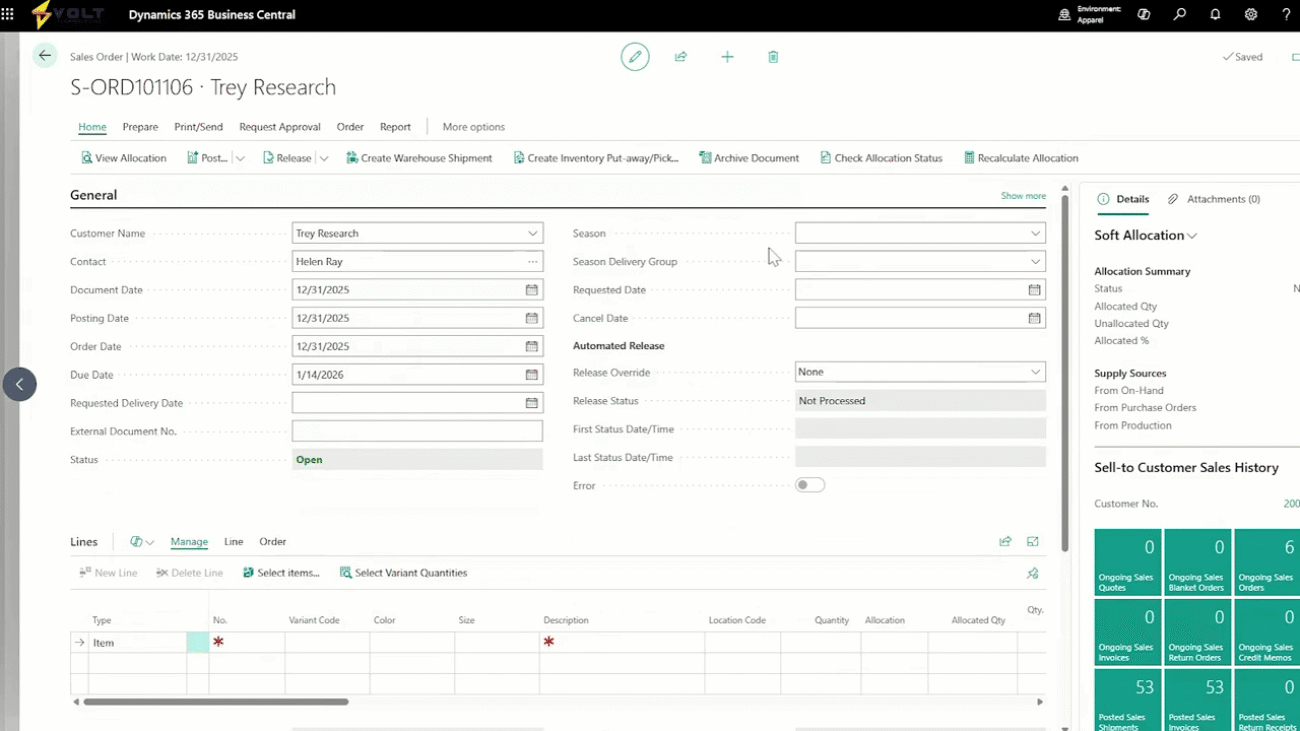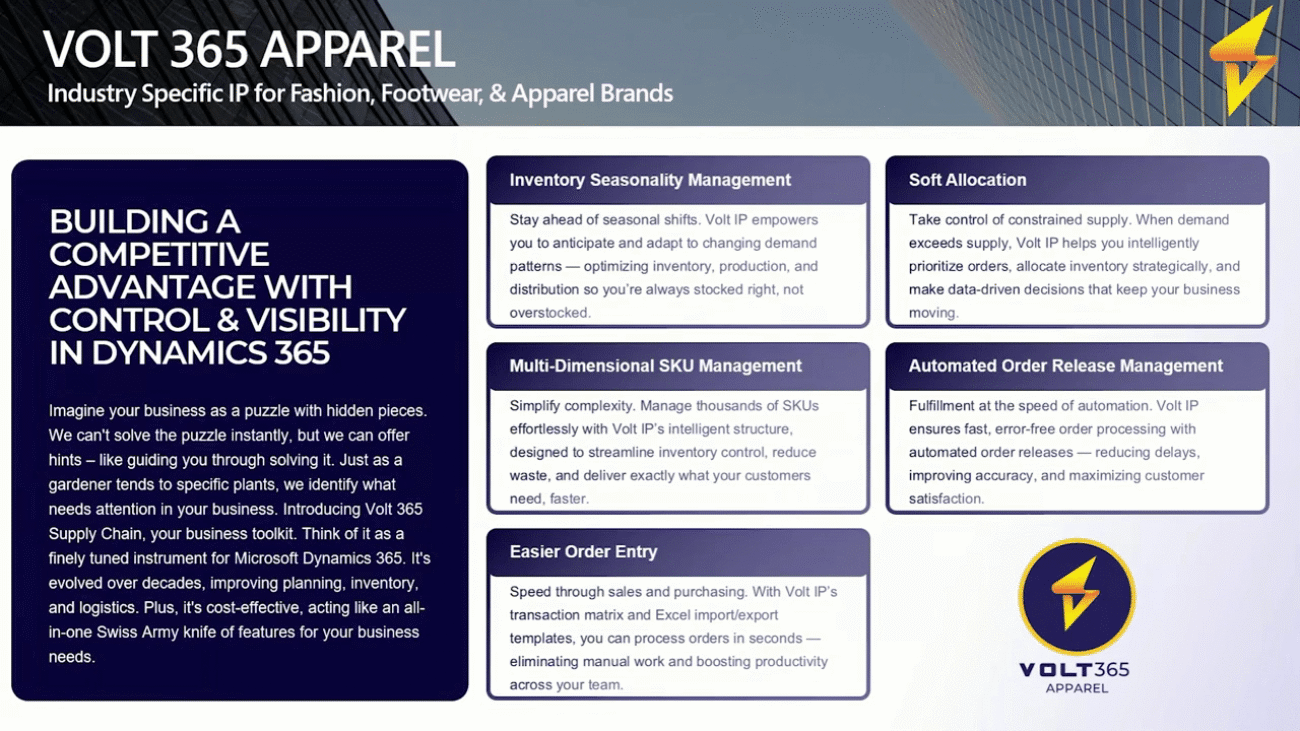
So what we've noticed is for a lot of our customers on the allocation side, they wanna prioritize specific demand, specific supply, and they wanna make sure that they're allocating that inventory out correctly to different customers to different transactions. So we've introduced the concept of soft allocation. On soft allocation, we have several different parameters that need to be set up before we can actually run that. So I'm gonna run you through some of those here today. We're gonna be looking at demand sequences, our supply sequences, period templates, and then finally, our soft allocation plan. So let's start with our demand sequence. I'll navigate over to our demand sequence screen. And then from here, we can see that I've already set up a sequence on how I would like to prioritize my sales, my demand on the allocation side. So right off the bat, number one, I have my ecommerce orders. Ecommerce orders are gonna be our highest margin. As these order orders come in, we're going to have already captured the sale as well. So we always want to allocate inventory to ecommerce orders over any type of transaction. Next, we have selected wholesale. So any type of wholesale would be next. We have our demand forecast. So if we have a forecast associated that we've created in the system, we've put a group of customers who are our top customers. We've even put EDI orders, and then we've put one specific customer for Trey Research and then for Adamantum Corporation. So you can set these up however you'd like. They can be for sales orders, blanket sales orders, transfer orders, service orders, demand forecasts, and then we can filter on different types of orders, different types of customers, different forecast, however you would like to set that up. We can have multiple demand sequences as well. But in this instance, this is the one that we're utilizing. So we're going from ecommerce to wholesale to demand, top customers, EDI orders, and then Trade Research and Adamantum Corporation. So as these transactions come in, this is our prioritization. We then have the concept of supply sequences. So as these orders come in, we're going to allocate inventory to our ecommerce, to our wholesale. But how are we actually allocating that inventory? Where are those allocations coming from? Right? So in this instance, what I said is we always wanna allocate from on hand inventory first. If we don't have on hand inventory, then we wanna allocate from purchase orders, so inbound purchase orders. And then if we don't have inbound purchase orders, we wanna allocate from inbound transfer orders. So maybe you have multiple locations that inventory is coming from into multiple different locations. Right? So in this instance, we could have purchase orders coming in from vendors, transfer orders from different locations, but we're always gonna allocate from on hand inventory first, then our purchase orders, and then our transfer orders. So that's our demand sequence. That's our supply sequence. Now let's go ahead and take a look here at our allocation period templates. So I'll search for period templates. And from here, this is where we can see the concept of a period template. We can configure these period templates to be in days, weeks, months, quarters, years. We can put our starting date formula. So in this instance, we want it to look starting back in the last three months. We can define the size of these soft allocation periods. And then what this does is when we run soft allocation, this is gonna pry it's gonna show what we're prioritizing demand and supply. So the lowest priority transaction for the current period is higher when the highest priority transaction or is higher than the highest priority transaction for the next period. So once we put this all together on the allocation plan, it will make more sense, but you'll see some of those common configuration examples that we have. So weekly, monthly, daily, quarterly. We can even do a test period generation. So how I have this set up per month, looking at the last three months, the bucket one will start on nine ten twenty twenty five going all the way to one ten twenty twenty six. Great. So once you have your sequences set up, you have your period templates set up, then what we do is we move into our soft allocation plans. And just like any of these period templates or these demand or supply sequences, we can have multiple plans. In this instance, we're utilizing one plan. And from here, this is where I start putting everything together. So I can select the period template that we're utilizing, the demand sequence, the supply sequence. We can even utilize planning worksheets to be brought into these allocation plans. So if you're utilizing MRP or utilizing the planning worksheet, you'd like that to be considered in this, you can do that as well. We have our preliminary pass, our item filters, our variant dimensions. So we've added in all sorts of parameters around this. You can make this really as complicated or as simple as you'd like. So if you have questions around this, you know, please feel free just to reach out, we'd be more than happy to answer these questions. So let's go ahead and navigate over to a sales order that I've already run soft allocation for. So I'm gonna navigate over to my sales order that is our ninety seven. And from here, I can actually see that I ran allocation earlier today for the purpose of this demonstration. I can see the items. I can see the variance, and I can see which of these lines have been allocated. So we can see that these first two lines have been fully allocated for their quantities of forty and twenty. We can see that this, for example, has not been allocated. So for whatever reason, we have not allocated over those fifteen. I'll showcase how we can see that here in just a second. We've allocated the full thirty five here. And then in this instance, we've allocated over ten of our twenty. You always have the ability to look and see, you know, why that is just by looking over here on the right. Right? So we can see allocated quantity unallocated, the percentages. Was this allocated from on hand? Was it allocated from purchase orders, from production orders? So, for example, here, we could see this one was allocated from a purchase order. This one was fully allocated from our on hand. But we also have the ability to go into what's called our soft allocation inquiry to see additional information on top of that. So if I navigate back to the home screen, I search for my soft allocation inquiry. We can see when soft allocation was run, which lines are here, the supply type. So in this instance, we can see that these were fully allocated from on hand. This one was from a purchase order, and this was partially allocated from the current on hand inventory. So we only have ten on hand, but we needed twenty. At this point in time, these are just soft reservations. We have not reserved the inventory to these particular orders. We've run this to see what this would look like. So this is something that can be extremely helpful. You know, maybe you really run run it at the end of the day, the end of the month, whatever that may be. In this instance here, we've run just to see based off our current on hand, purchase orders, based off our current inbound transfer orders, out of these orders, which ones could we allocate inventory to, and where would that be coming from?
This demonstration walks through the setup and configuration of soft allocation functionality for inventory management. The presenter explains how customers can prioritize specific demand and supply to allocate inventory correctly across different customers and transactions. The setup process involves four key components: demand sequences (which prioritize different order types like ecommerce, wholesale, forecasts, and specific customers), supply sequences (which determine allocation sources starting with on-hand inventory, then purchase orders, then transfer orders), period templates (which configure time-based allocation periods), and soft allocation plans (which bring all components together).
The demo shows a practical example using sales order 97, demonstrating how the system allocates inventory based on the configured priorities and displays allocation results through inquiry screens. The presenter emphasizes that soft allocation creates reservations to help visualize potential inventory allocation scenarios before making final commitments.