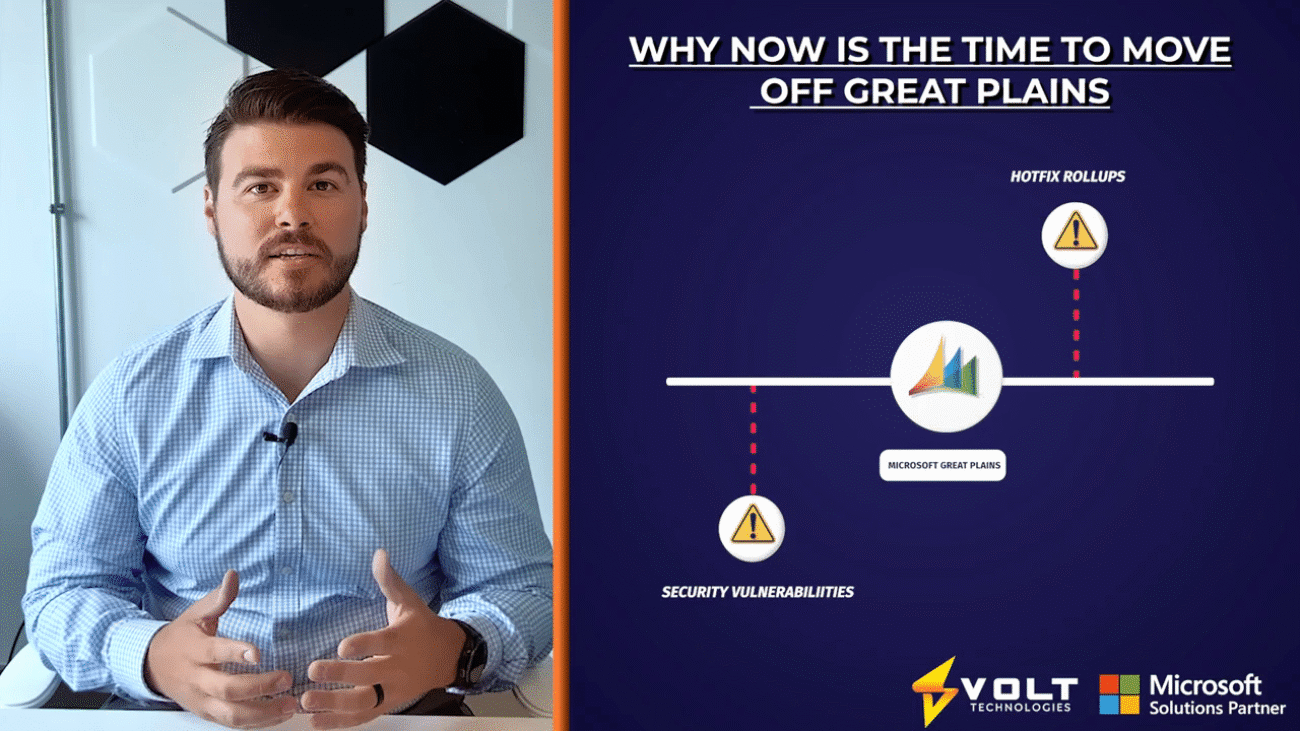
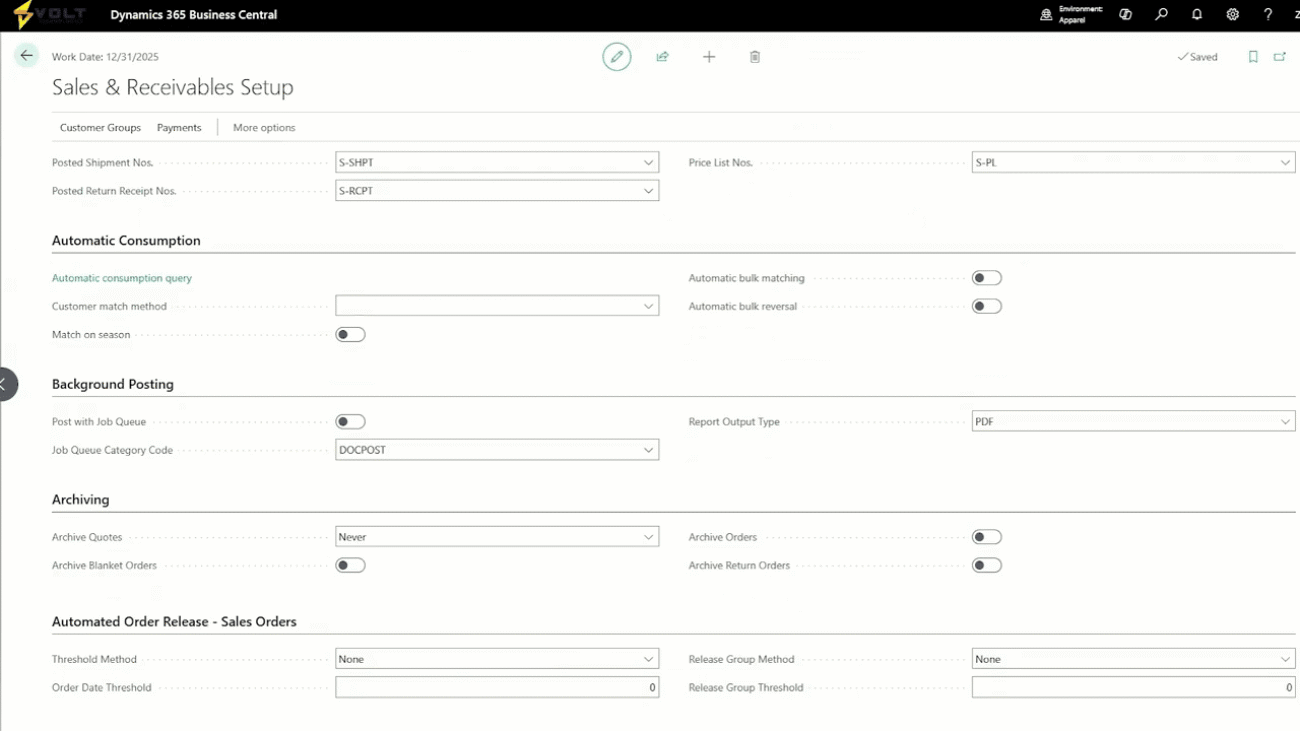
If you're on Dynamics Navision today, it's time to make that natural upgrade into Dynamics three sixty five Business Central. What a lot of customers don't realize is that Microsoft actually stopped supporting Navision in January of twenty twenty three. That means you're vulnerable when it comes to security. Today, I'm going to walk you through what that process looks like upgrading from Navision into D365 Business Central and how we can help. My name is Zach Kerhalitz. I'm the Director of Business Development here at Voalte Technologies, and I'm going to walk you through what that upgrade process looks like. If you're still running on Navision today, that means you're living in the past. You need to go ahead and look at that process from upgrading from the Vision into Dynamics three sixty five Business Central. As I mentioned earlier, Microsoft no longer supports the Vision. That happened in January of twenty twenty three. Additionally, you're going to be very vulnerable when it comes to security. On top of that, you're missing out on all sorts of capabilities within Dynamics three sixty five Business Central, whether it's AI, advanced planning capabilities, warehousing, all sorts of other additional tools. Lastly, you're definitely going to want to make that move from this clunky on prem hardware into the modern cloud based ERP. So today, we're going to walk you through that process. When making the move from the vision to Dynamics three sixty five Business Central, there's several different ways you can handle these implementations. Obviously, you have the lift and shift model where you just take the processes, the data that you have within the vision, and move it into Business Central. That's not what I would recommend, though. These implementations are hard, they're complex, and they take a generally long period of time to go through. It's important that you actually get the rewards out of this. So let's look at actually improving those processes, introducing new capabilities, as well as cleansing your data. So what we're going to do is that first phase of the project is go through and diagnose you. This is like a doctor's appointment, where we get an understanding for the functional and technical scope of the implementation. What type of processes are you running in Navision today? Are you just doing finance? Are you doing purchasing? Sales? Maybe you're doing manufacturing. We need to understand what that looks like. Then we move into our technical scope or our four waterfall tests. Our integrations so is your Navision environment integrated into any other peripheral systems? Your reports I'm sure you have critical reports that you run on daily, weekly, maybe even monthly basis. We need to make sure that those reports are replicated in Business Central. You additionally then have your extensions or ISVs, so as part of these implementations, we always run into individual environments where you have extended or customized it, or you're utilizing an independent software vendor. We need to understand those processes, see if it can be replaced by out of the box Business Central, and if not, then identify how we're going to handle that, whether that's by changing the process to meet out of the box capabilities, extending the system, or introducing an independent software Finally, you have the data migration. Data migration is really one of the first key steps of this process. We need to identify what data is coming over and how it's coming over. So which customers? Which vendors? Which items? Our chart of accounts. For financial, we always want to bring over any open transactions, but we also want to understand how we're going to handle this historical. Our general recommendation is three years financial historical summary level data. That being said, every customer has different requirements. We'll work with you to identify that. Once we've gone through, we've fully identified our functional and technical scope for the project, we then move into the actual design phase, and this is where we actually get into building the processes that you have within Navision in Dynamics three sixty five Business Central. Generally, we look to improve those processes, introduce new tools, capabilities as well. We have done several of these implementations of these upgrades from Navisions to Dynamics three sixty five Business Central. We've worked with customers who have extremely customized and extended Navision environments. We've worked with customers who have very standard basic Navision environments. When you have the basic processes, generally that makes the implementation easier. That being said, if you have a customized Navision environment, that's not a red flag by any means. What we'll do is we'll go through and we'll identify every extension in the tables and fields within your NoVision environment. We'll go through these extensions and say, okay, some of these can be replaced by out of the box Dynamics three sixty five Business Central capabilities. Maybe some of the customizations or extensions that you have in the environment you're no longer using. Additionally, we'll look and see if there are any independent software vendors out there that we can build into Business Central to replace those extensions. Finally, one of the first things we will do on top of all that is to make sure that if a process is extended within the vision, is there any way to change that process to actually make it out of the box? That being said, a lot of our customers have some sort of process that they run that's so specific to their business that they have to continue utilizing. In that instance we will look to utilize an extension or an ISV. It's like renovating a house when you're still living in it. The structure is sound but the wiring, the plumbing, it's all set to an older standard. What you need is someone to come in and upgrade that to the future to the current standards that are out there and this is something that we'll do while you're running the business the entire time as well. Obviously the more up to date version you're on, the easier the upgrade from Navision to Dynamics three sixty five Business Central is going to be. That being said, if you're running a product like Navision two thousand and nine, it doesn't necessarily mean that this is going to make it more complex than a customer who's running something like Navision twenty fifteen. There are steps that we can take to make that upgrade path easier for each process. So long story short, yes and no. It really just depends on the capabilities and the processes you're running in the system. We'll make sure to identify what that would look like and ultimately get you to a successful go live. The longer you wait, the further you're getting to Dynamics three sixty five Business Central. Microsoft rolls out updates to BC every six weeks with two major updates a year. As they make these updates, Nuvision and Dynamics three sixty five Business Central are getting different. There's new processes, new capabilities. It makes the migration process more difficult. We need to make sure that we're setting you up for success so the sooner you run these implementations, these upgrades, the easier the project will be. Additionally, on top of that, we mentioned that Microsoft stopped supporting the product in twenty twenty three. Every day, every week, every month that goes by, your security and vulnerability is getting more at risk. Lastly, the technical debt. As you're supporting the vision, every dollar you spend is something that you're going to have to spend on the Dynamics three sixty five implementation as well. So maybe you create a new report within Navision, or you go and you add an extension, or you're adding new records, new files, new items, customers. This makes the implementation upgrade more complex, so you're actually double dipping when you're making that investment. It adds scope to the project. So go ahead, rip the bandit off, let's talk, let's help you navigate through that upgrade and make the change into Business Central. If you've been thinking about making the move from the vision to Dynamics three sixty five Business Central, stop waiting. Go ahead, reach out to us here at Volt Technologies, and we'll help guide you through that process. We're more than happy to take you through a free consultation of what that process would look like, going through a discovery, understanding what your division environment looks like, and ultimately coming back to you with what that timeline, resource structure, and budget would look like. If you enjoy this content, please subscribe, and if there's anything we can ever do to help in the future, just reach out.