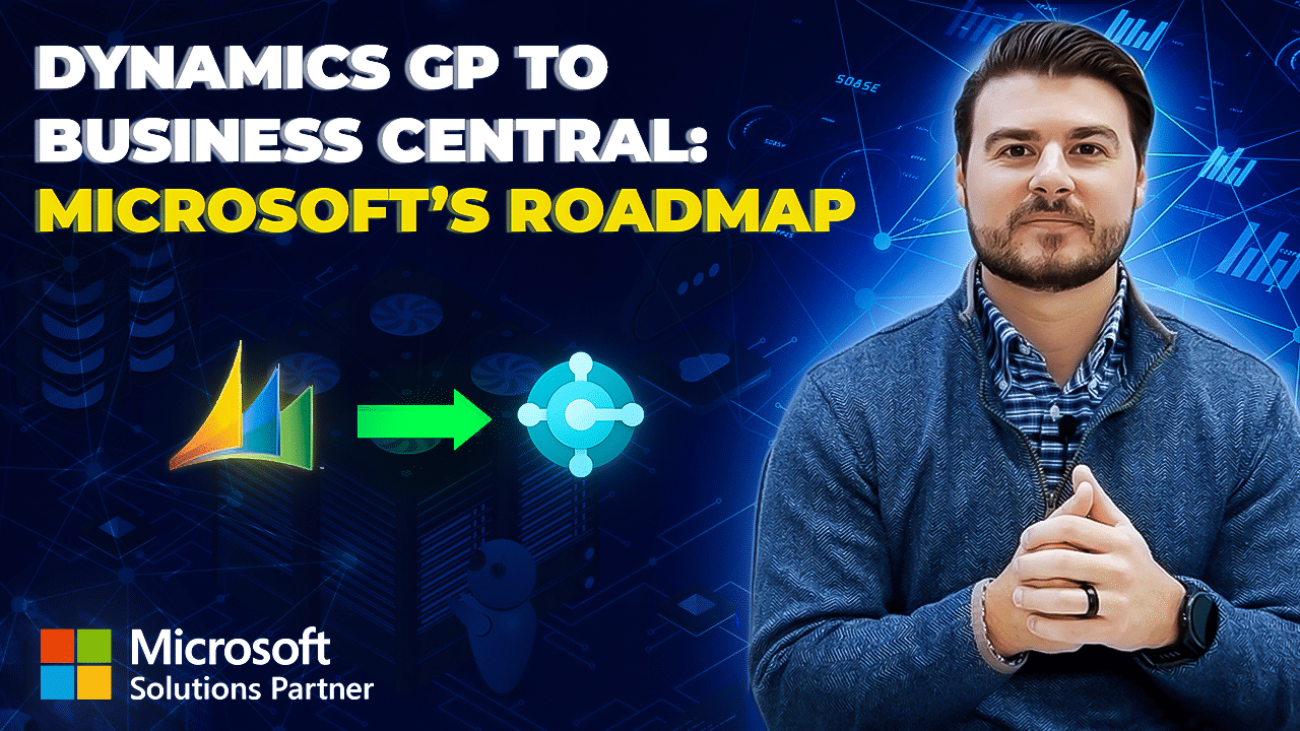
So you're currently running on dynamic scrape planes or GP as it's commonly referred to, and you're wondering what that upgrade path looks like to Dynamics three sixty five Business Central. With Great Plains going end of life in the coming years, there's a lot of discussion in the Microsoft channel on what are the differences between the products and then what that upgrade path ultimately looks like. So I wanted to shed some light on some of the main differences that I've seen between GP and BC and help just educate you all on just some of the areas of differentiation. And the first biggest one with GP versus BC that I see all the time is the difference in the capabilities from a financial standpoint and an inventory standpoint. Great Plains is a wonderful product and there's a lot of capabilities around financials. You see actually larger companies, multi entity setup running on Great Plains and wanting to make sure that those features are still in existence in Business Central. They are in Business Central. There's multi entity management within VC, intercompany consolidation with business units. But there are a couple of features that in GP you are going to have, and in Business Central you won't when it comes to intercompany and multi entity management. But for the vast majority of them, they are going to be about a ninety five percent match. But at the same time, on the Business Central side, you have a lot more capabilities when it comes to inventory management with warehousing manufacturing, as well as with project management too. So there's a lot more capabilities kind of across the supply chain versus Great Plains is really specializing in the financial management side or the accounting system side of the ERP. So those are really the main differences that we see in terms of the capabilities. The other two main differences, it comes around the deployment model where you're able to have on premise with great planes, but not in the cloud. Business Central is both available on prem and in the cloud. So you have that change in regards to the licensing model. Eventually, Business Central on premise is going to be deprecated and the only thing remaining will be the cloud. So with on premise purchasing, you're going to have that upfront fixed fee cost that you're going to incur and then the renewal on maintenance. But it's not going be tied really direct to your users in Entre ID and their actual named user. Versus in the cloud, you're going to be purchasing seats that actually get attached like a normal Microsoft three sixty five Business Standard license that gets you access to Outlook, Office, PowerPoint, Word, Teams, etcetera. It's gonna be similar to that sort of setup in the cloud where you're attaching it to the individual users. These are just some of the main differences that we see with Dynamics three sixty five Business Central versus Great Plains coming down to some of the differences in the capabilities, specifically around financials and inventory, and then also the deployment model as well. If you have other differences that you've seen as well, I'd love to hear back from you. Leave some thoughts in the comments below, and let's have a conversation about it.
Dynamics GP vs Business Central: Critical Migration Insights You Can’t Miss https://volt-technologies.com/contact/ With Microsoft Great Plains approaching end of life, understanding the differences between GP and Dynamics 365 Business Central is crucial for planning your migration:
- Financial Management Comparison: Learn where GP excels and how BC matches 95% of these capabilities
- Supply Chain Advantages: Discover BC’s enhanced inventory, warehousing, and manufacturing features
- Deployment Options: Understand the differences between on-premise and cloud-based solutions
- Licensing Models Explained: See how the transition affects your user management and costs
Business Central represents Microsoft’s complete vision for a modern ERP.